Description
Image sensors and computer vision have become increasingly important technologies across a wide range of industries. While the automotive sector has been one of the major drivers of this development, particularly through Advanced Driver Assistance Systems (ADAS) and Automated Driving (AD), the rapid progress of AI is creating significant opportunities in robotics and industrial applications as well. During interviews with exhibitors at Automatica 2025, we observed that conventional industrial robots typically still use a relatively small number of image sensors. These 1 to 2 cameras can provide the robot with information required for tasks such as object detection, positioning, quality inspection, or guidance. Also, fine-tuned AI or classical algorithms are involved for specific tasks.
However, the situation changes significantly when considering mobile robots including UGVs, AUVs, UAVs and humanoid robots. A humanoid robot, for example, may need cameras directed toward the front, sides, rear, hands, work area, and potentially other parts of its body. The number of image sensors required by such systems can therefore increase rapidly. And modern AI-based vision algorithms enable autonomous systems not only to detect objects, but also to recognize, track, classify, label them, and consequently, estimate the own position and attitude relative to those objects.
PLC2’s experience in developing video recording solutions for automotive AD and ADAS validation provides a strong foundation for autonomous industrial vision applications, particularly in handling, synchronizing, processing, and recording multiple parallel camera streams with different formats and resolutions.
Methodology
Automotive Electronic Control Unit (ECU) development has traditionally required recording a large number of camera streams alongside radar and auxiliary bus data to validate increasingly sophisticated ADAS and automated driving functions. Development teams have targeted systems with approximately 12 to 16 parallel video channels to capture the vehicle’s environment from different perspectives. Depending on the application, only a subset of these cameras may be required.
[The experience gained from automotive ADAS validation provides a valuable foundation for addressing similar technical challenges in industrial vision and robotics, where camera configurations, processing requirements, and operating conditions vary depending on the application.]
Scalable multi-camera architectures
This experience demonstrates the importance of flexible video acquisition and processing architectures for industrial vision and robotics. Rather than being designed for a fixed number of cameras, systems should support different sensor configurations while providing sufficient bandwidth and processing capacity for simultaneous video streams. Key challenges include transporting, synchronizing, processing, and recording high-bandwidth video data. Mobile robotic applications also impose stricter power consumption requirements than stationary industrial systems. Technologies such as programmable logic in FPGAs and SoCs, embedded Linux drivers, and standards like GenICam can support flexible system architectures.
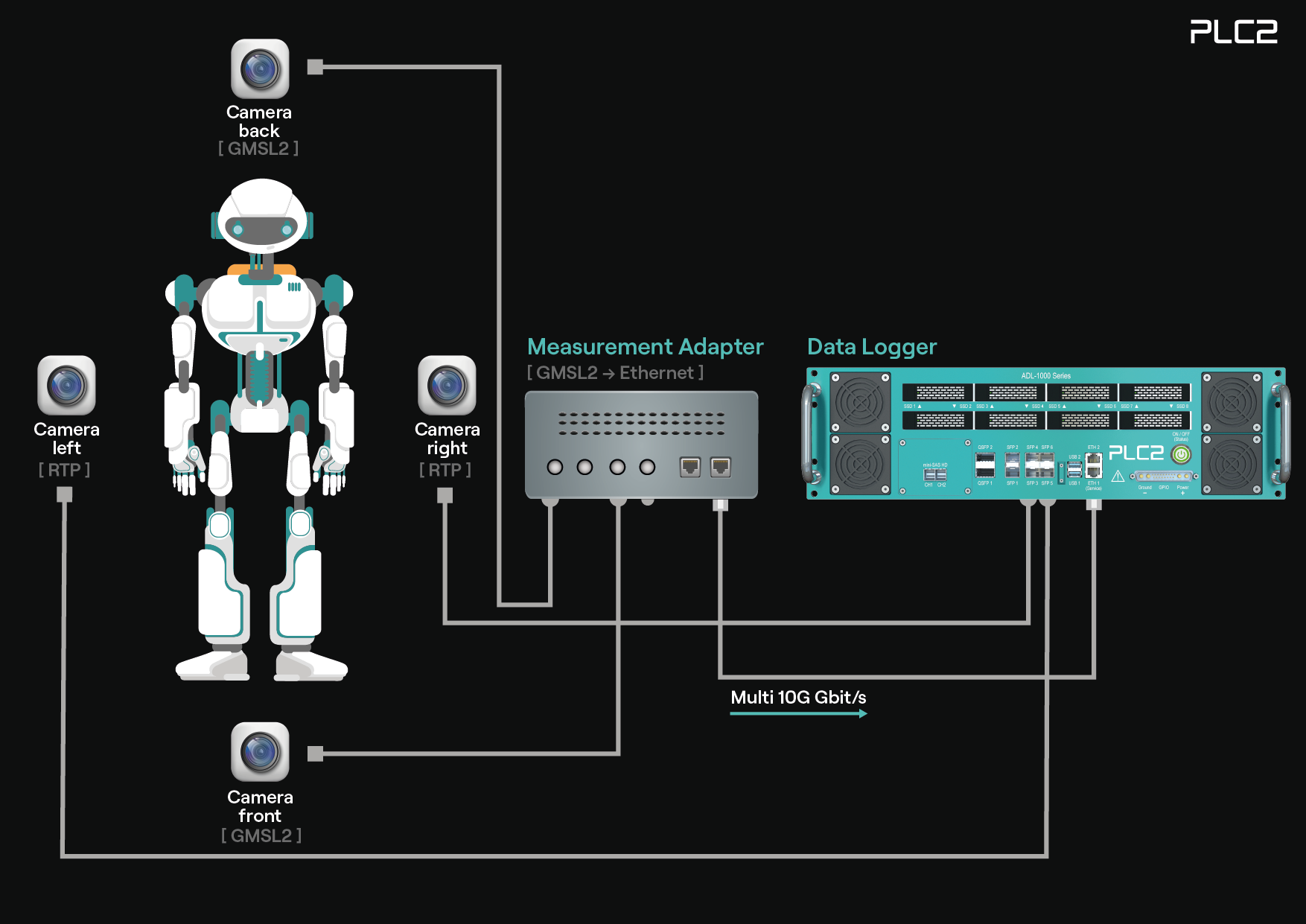
Figure 1: Flexible video acquisition and processing architecture including a data recorder
Camera interfaces and system integration
One important difference between automotive and industrial vision applications lies in the camera interfaces. Automotive systems commonly use high-speed technologies such as GMSLx or FPD-Link, which provide robust connections over relatively long cable distances. For development and validation, these interfaces typically require dedicated measurement adapters to convert camera streams into formats compatible with standard computing platforms, such as GigE Vision or Real-Time Streaming Protocol (RTSP). This adds complexity and specialized hardware requirements. Industrial cameras with native Ethernet interfaces can connect directly to Ethernet infrastructure, while RTSP streams can be integrated into suitable video-processing and recording pipelines. MIPI interfaces provide another option for short-distance connections.
PLC2 has practical experience integrating industrial cameras using MIPI, GigE Vision, and RTSP into video pipelines for data-recording applications. This expertise provides a foundation for developing flexible multi-camera systems for industrial vision.
AI-based processing and smart recording
Depending on the application, AI inference can be integrated into video-processing pipelines to perform object detection, recognition, or smart triggering functions. Processing preview streams can enable event-based recording, capturing only relevant data. Recorded video and sensor data allow engineers to analyze robot behavior, reproduce challenging situations, evaluate AI algorithms, and improve system performance. Similar to automotive ADAS validation, capturing sensor data surrounding specific events can be particularly valuable for development and debugging.
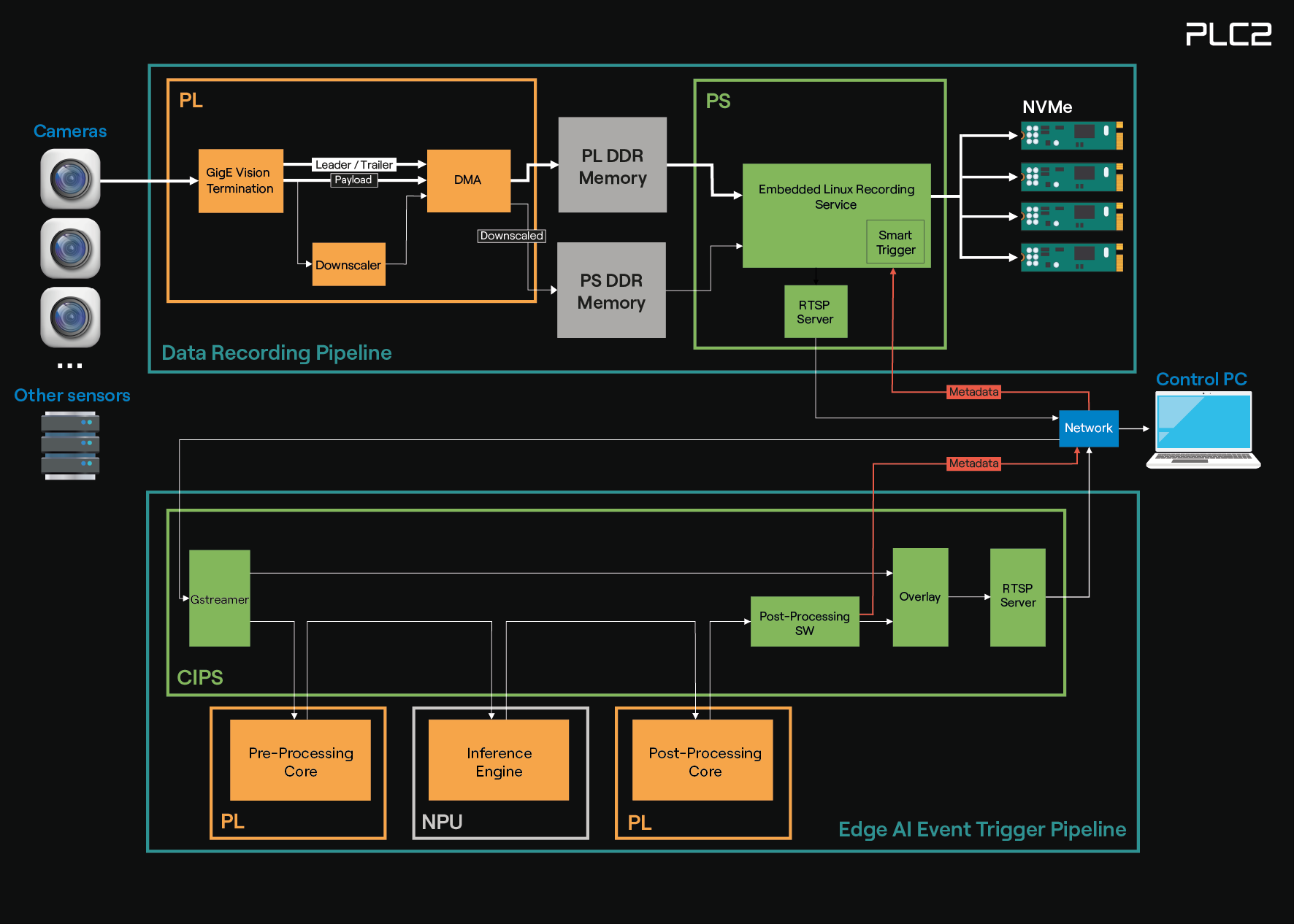
Figure 2: Video pipelines for recording and smart triggering
Conclusion
Industrial vision applications are increasingly shaped by the convergence of three key developments:
- increasingly capable AI-based perception
- a growing number of cameras on intelligent machines
- the need to efficiently acquire, process, and record the resulting video data for development and operational purposes
These developments require scalable video-processing architectures that can handle multiple parallel camera streams, support different sensor configurations, provide synchronization and timestamping, and enable AI-based processing and event-triggered recording.
PLC2’s experience in automotive AD and ADAS validation, combined with practical expertise in integrating industrial cameras and developing multi-channel video pipelines, provides a strong technological foundation for addressing these challenges. This expertise can be leveraged to develop flexible and scalable video acquisition, processing, and recording solutions for industrial robotics and autonomous systems.